
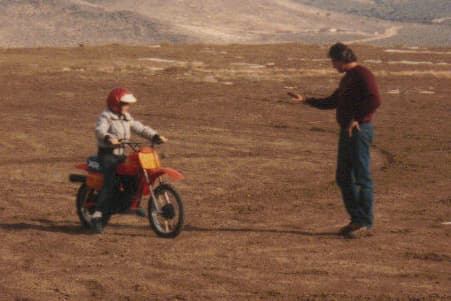
Christmas morning, 1985. My father is standing behind me while I sit on a motorcycle for the first time. I was eight. He was excited for me, but he was also doing what he always did, making sure I understood the responsibility that came with the thing I wanted to do.
My father built things with his hands.
That is not a figure of speech. He fixed what was broken and made what did not exist yet. He taught me that most problems can be worked through if you have the right tools, enough patience, and the willingness to learn.
He taught me to work hard, ask questions, and trust my own judgment. He loved motorcycles, projects, and a life that was practical, direct, and full. He was a simple man in the best sense of the word, and he was the best man I've ever known.
Food mattered to my dad. A good meal was how he celebrated, connected, and spent time with the people he loved.
In his final year, my father developed a gastrointestinal condition that made eating require real planning. Eating out became difficult. My mom and I would call restaurants, read menus, ask questions, and try to find something he could actually tolerate. Most of the time, the information we needed was incomplete or not available.
Anyone who has a dietary restriction, or loves someone who does, knows some version of this. The menu is outdated. Ingredients are missing. Staff are trying to help, but they do not have enough information. You end up guessing when you should not have to guess.
When we did find a place where my dad could sit down and enjoy a meal comfortably, it mattered. It gave him a normal moment, and it gave all of us a little relief.
My dad passed away in January 2026. Our last meal together was Christmas Eve.
I think about that meal often. I think about how much effort went into making it possible, and how basic that information should have been. Families should not have to work that hard to find a meal that fits someone they love.
That is why hello.food exists.
I built it because I watched my mom, the most resourceful person I know, struggle to find clear information about what restaurants could serve my dad. That should not be the normal experience.
hello.food started as an app for my mom. The idea was simple: tell it what you need, and it helps you understand where you can eat.
When I started building it, I realized the restaurant data was not structured in a useful way. Menus were scattered across PDFs, photos, old websites, and inconsistent formats. The information people need before they eat was not easy to search or compare.
So we started building that layer. hello.food extracts menus, breaks them into individual items, and organizes the details that matter: ingredients, preparation, allergen signals, and possible substitutions.
I built it because my father needed it. I keep building it because other families need it too.
This company will always carry my dad in it. Not as a marketing story. As the reason it exists.
Every restaurant page, every structured menu, every owner conversation, and every improvement to the product goes back to the same idea: people should have better information before they decide where and what to eat.